Unschooling Explained: What It Really Looks Like (And How to Start)
The Eaton Team
•July 20, 2026•
11 min read
You’ve read about unschooling and it sounds great in theory. But you have no idea what it looks like on a Tuesday morning. Your kids are still in pajamas at 10am. You’re wondering if you’re ruining their future. The Instagram posts show happy kids exploring nature. But what about math? What about college? What about the days when nobody wants to do anything?
Here’s the truth: unschooling isn’t about skipping education. It’s a specific approach where kids lead their own learning. They learn through real-world experiences, interests, and natural curiosity. But it’s also one of the most misunderstood homeschool methods out there.
This guide will walk you through what unschooling looks like in practice. You’ll learn how families structure their days. You’ll see how kids learn academic subjects without formal lessons. And you’ll learn how to know if this approach might work for your family. We’ll also cover the legal side. Unschooling still needs to meet your state’s homeschool requirements. Those vary widely across the country.
What Is Unschooling Really?
Unschooling is child-led learning. Your kids follow their interests without formal curriculum, textbooks, or set schedules. It’s not “school at home.” It’s learning through life itself. Your child might spend a week building with LEGOs. Another month cooking every meal with you. Or dive deep into dinosaurs until they can pronounce every species name.
This looks different from traditional homeschooling. With traditional homeschooling, you follow a curriculum. You teach specific subjects at specific times. It’s also different from relaxed homeschooling. With relaxed homeschooling, you might use some curriculum but keep things flexible. With unschooling, there’s no curriculum at all. Learning happens when your daughter asks how bread rises. You end up exploring yeast together. Or when your son wants to understand video game design. He teaches himself coding.
Your role shifts from teacher to facilitator. You don’t deliver lessons. You provide resources, answer questions, and create an environment where curiosity can thrive. When your child wants to learn something, you help them find the tools. You help them find books, people, or experiences they need. You’re still deeply involved in their education. You’re just not the one deciding what they learn or when.
The learning is real. It just doesn’t look like school.
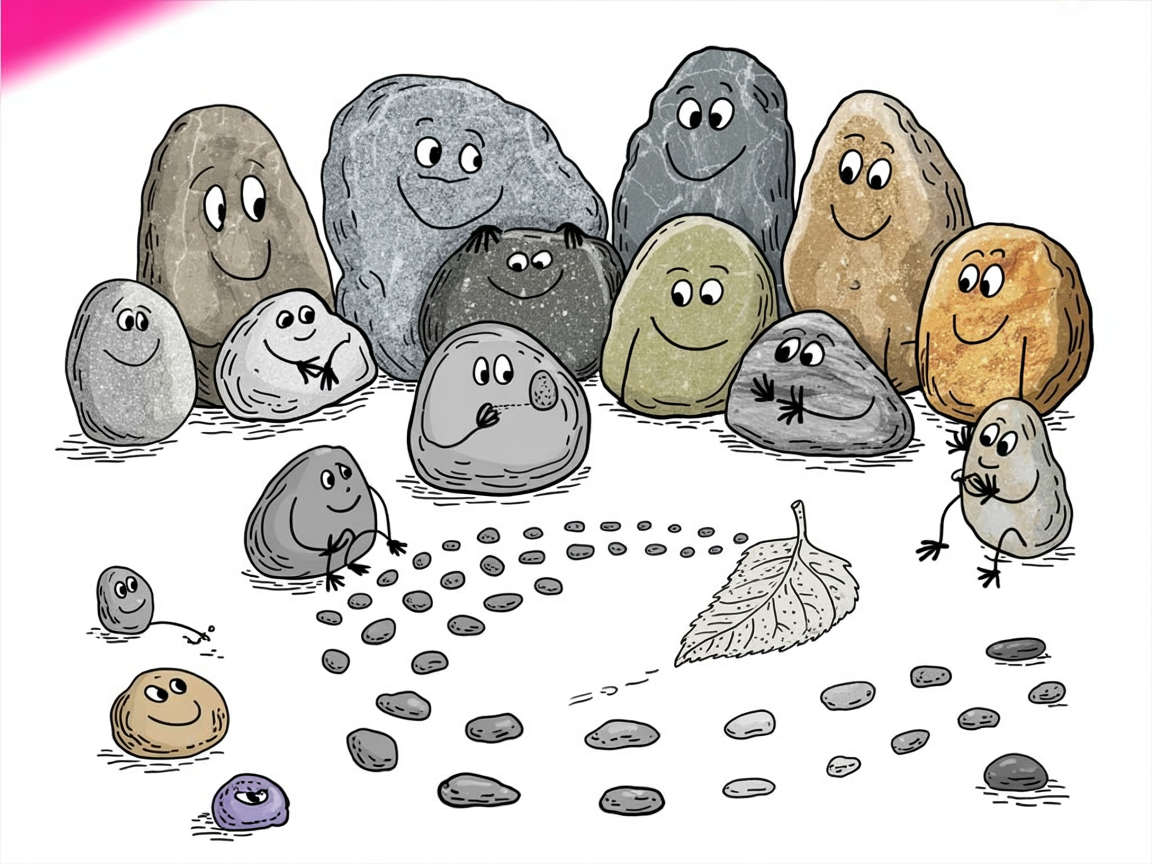
Unschooling is child-led learning where stone characters discover knowledge through play and curiosity
What Does an Unschooling Day Actually Look Like?
There’s no typical unschooling day. That’s the point. One morning might start with your daughter baking cookies. This leads to measuring fractions. Then reading recipe history. Then writing her own recipe cards. Another day might begin with everyone sleeping in. You were up late watching a documentary about space.
The afternoon could include a library trip. Your son disappears into the graphic novel section for two hours. Or a nature walk that turns into a three-hour investigation of creek ecosystems. Or your kids spending the entire day building an elaborate Minecraft world. They discuss architecture and city planning.
Screen time happens. So does free play. So do days when your kids seem to do “nothing.” But they’re processing, thinking, and letting their brains rest. Unschoolers see all of this as learning because it is. Your child playing video games is learning problem-solving, reading, and often complex math. Your kid lying on the couch thinking is developing creativity and self-awareness.
The key difference from traditional homeschooling? You’re not checking off subjects from a list. You’re watching for learning opportunities in whatever your kids are already doing. You’re trusting that curiosity will lead them where they need to go.
An unschooling day flows naturally as stone characters pursue their own interests and discoveries
How Unschooling Compares to Abeka Homeschool and Other Structured Programs
If you’re used to browsing curriculum catalogs, unschooling will feel like stepping into a different world. Programs like Abeka homeschool give you everything planned out. Daily lessons, tests, grade levels, the works. Time4Learning homeschool curriculum tracks every click. It generates progress reports automatically. You know exactly what your child should do each day.
Unschooling throws all of that out the window. There’s no curriculum to buy. No tests to grade. No scope and sequence chart on your wall. Your eight-year-old might spend weeks building with LEGOs. She learns fractions through cooking. Your neighbor’s eight-year-old works through a math workbook at the kitchen table. Both are homeschooling. They just look nothing alike.
Here’s what makes them different:
Structure: Traditional programs provide daily lesson plans and schedules; unschooling follows the child’s interests and questions
Assessment: Structured curricula include tests and grades; unschooling relies on observation and real-world application
Subjects: Formal programs separate math, science, and history into distinct lessons; unschooling lets subjects blend naturally through projects and exploration
Flexibility: Many families start with structure and gradually add more child-led learning, or switch methods as kids get older
You don’t have to pick one approach forever. Plenty of families use structured math but unschool everything else. Or start the year with a curriculum and let it go when it stops working.
Is Unschooling Legal in Your State?
Yes, unschooling is legal in all 50 states. But that doesn’t mean it’s equally easy everywhere. The real question isn’t whether you can unschool. It’s how much paperwork you’ll need to prove your kids are learning.
High-regulation states often require portfolios, testing, or subject-specific documentation. That means you’ll need to get creative. You need to show how a morning spent building a treehouse counts as physics and math. Many unschooling families in these states keep journals. They take photos. They save project work to demonstrate learning without formal lessons.
Before you dive in, look up your state’s specific requirements. Know what you’re signing up for. The freedom of unschooling works best when you’re not scrambling to meet compliance deadlines you didn’t know existed.
Can Unschooled Kids Really Learn Math and Reading?
This is the question that keeps parents up at night. You’re picturing your child at 18. Unable to read a job application because you trusted them to learn when they were ready. It’s a valid fear. But here’s what happens in unschooling families.
Children learn to read when they’re developmentally ready. That might be age 5 or age 10. The late starters often catch up within months once they’re motivated. They skip years of phonics worksheets. They jump straight into reading what interests them. Comic books, video game guides, recipe blogs.
Math works the same way. Kids encounter fractions while baking. Percentages while shopping. Geometry while building with blocks or Minecraft. They learn multiplication because they need it for something that matters to them. A child running a lemonade stand learns more about money than any worksheet could teach.
Many unschooling families do add some structure for basics. Maybe 20 minutes of math practice a few times a week. Or reading together daily. They’re still child-led overall. Just with a safety net for foundational skills. There’s no rule that says you can’t blend approaches when something matters to you.
Unschooling children develop math and reading skills naturally through hands-on exploration and real-world discovery
Is Unschooling Right for Your Family?
Unschooling works beautifully for some families. It creates constant stress for others. The difference usually comes down to three things. Your temperament, your state’s homeschool laws, and your comfort with uncertainty.
Here’s what you need to consider before jumping in:
Your control needs. Do you need to see measurable progress every week? Do you feel anxious when things don’t go according to plan? If so, unschooling will be hard. This approach requires trusting that learning is happening even when you can’t check it off a list.
Your state’s requirements. States like New York, Pennsylvania, and Massachusetts have strict homeschool regulations. They may require portfolios, testing, or specific subject coverage. Unschooling can meet these requirements. But you’ll need to document learning carefully. In contrast, 11 states including Texas, Alaska, and Idaho have little to no regulation. This gives you more flexibility.
Your work schedule. Unschooling needs a present parent. Not hovering, but available to facilitate experiences. Available to answer questions and connect kids with resources. If you work full-time outside the home, this approach gets complicated.
Your family’s learning styles. Some kids thrive with structure. They feel lost without it. Others resist formal lessons but devour information when they’re in charge. Be honest about what your actual kids need. Not what sounds good in theory.
Your 90-Day Unschooling Trial Plan
You don’t have to commit to unschooling forever on day one. Many families ease in with a three-month trial. They see if this approach fits their kids and their sanity. Here’s how to structure those first 90 days. You can make an informed decision:
Month 1: Deschool and observe. Take a complete break from formal learning. No worksheets, no curriculum, no guilt. Your job is to watch what your kids naturally gravitate toward when they’re not being directed. Yes, they’ll probably watch more TV than you’d like at first. That’s normal after years of structured school.
Month 2: Notice interests and provide resources. By now you’ve seen patterns. Your daughter keeps drawing maps? Grab some atlases from the library. Your son asks about how engines work? Find YouTube videos or visit a car repair shop. Provide materials and opportunities without forcing outcomes or quizzing afterward.
Month 3: Document learning and evaluate. Start writing down what’s happening. The questions asked, books read, projects built, conversations had. At the end of the month, sit down as a family. Talk honestly about how everyone feels. You can always return to structure. Or try a hybrid approach that mixes unschooling with some formal lessons.
Frequently Asked Questions
What about socialization with unschooling?
Unschoolers often have more time for real-world social experiences than traditionally schooled kids. Your children can join community activities, sports teams, co-ops, volunteer groups, and hobby clubs during the day. These spaces aren’t crowded then. They’ll interact with people of all ages. Not just kids born the same year. Many unschooling families find their kids develop strong social skills. They’re practicing conversation and collaboration in authentic settings. Not artificial classroom environments.
Can unschooled kids get into college?
Yes. Colleges regularly accept unschoolers. You’ll create a parent-generated transcript that documents your child’s learning. Many unschoolers strengthen their applications with SAT or ACT scores. They take dual enrollment credits from community college. They build portfolios of their work. They write detailed descriptions of their projects. That said, not all unschoolers choose college. Some pursue apprenticeships, start businesses, or take other paths that fit their interests and goals.
Do I need to be with my kids all day for unschooling?
Not necessarily. Younger children need more supervision and involvement. But older unschoolers often work independently on projects that interest them. Many families combine unschooling with part-time work. They use community resources like libraries, maker spaces, museums, and online courses. Your role shifts from teacher to facilitator. You’re helping your kids find resources and opportunities. Not delivering lessons all day.
What if my child just wants to play video games all day?
This is incredibly common during the deschooling period after leaving traditional school. Most kids balance out after a few months. They’ve had time to decompress. Video games involve real learning. Reading, problem-solving, strategy, collaboration, and creativity. Instead of fighting it, engage with the games your child loves. Ask questions. Help them connect gaming interests to broader topics. Like game design, storytelling, or programming. You might be surprised where it leads.
Can you start with a homeschool preschool program and switch to unschooling later?
Absolutely. Many families begin with structured homeschool preschool programs. They gradually shift toward unschooling as they gain confidence. They see what works for their kids. Others start with unschooling and later add more structure. You’re not locked into one approach forever. Your homeschool can evolve as your family’s needs and preferences change. The best method is the one that’s working for you right now.
Unschooling isn’t for everyone. That’s completely okay. Some families thrive with this approach. Kids blossom when they direct their own learning. Parents love the flexibility. Other families try it and realize they need more structure. Both outcomes are valid.
If you’re curious about unschooling, start with a 90-day trial period. Pick a season when you can relax into it without pressure. Watch what your kids gravitate toward. Notice what they learn when you’re not directing every moment. Document what happens so you can meet your state’s requirements.
Remember: you don’t have to choose between pure unschooling and traditional curriculum. Many families land somewhere in the middle. They unschool most subjects while using a math program. Or they follow kids’ interests during the school year. They do structured review in summer. The goal isn’t to follow someone else’s ideal. It’s to find what works for your family on those real Tuesday mornings.
Trust yourself. You know your kids better than any method does.
Curated resources and expert insights from the Eaton team to support your homeschool journey. Our content is researched and crafted to help families thrive.