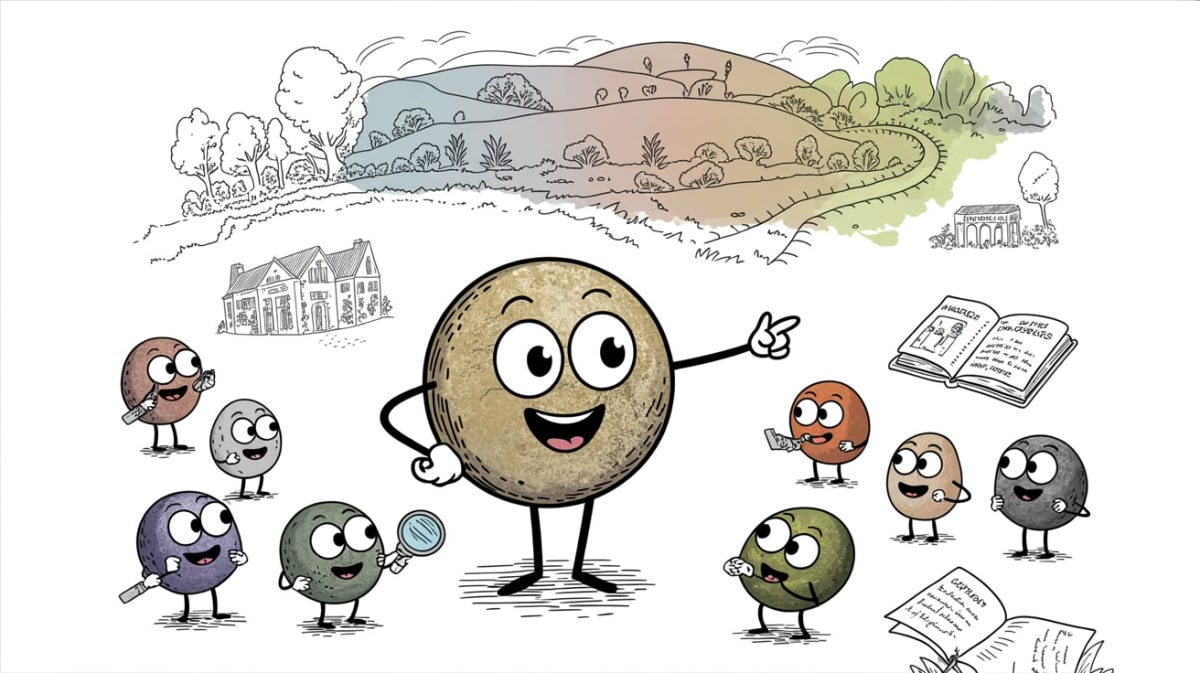
Homeschool Field Trips: Build Your Curriculum Around Adventures
The Eaton Team
•September 8, 2026•
14 min read
You see another homeschool family’s Instagram post—their kids grinning at a science museum, caption reading “Best school day ever!” Meanwhile, you’re staring at your curriculum planner wondering: Does that actually count as school? Should I be doing more homeschool field trips? Can I afford it? And honestly, how do I make sure a fun outing translates into real learning instead of just expensive chaos?
Here’s the secret most homeschool parents discover too late: you’ve been thinking about field trips backwards. Instead of squeezing occasional outings around your textbook schedule, what if homeschool field trips became the backbone of your entire educational approach—and actually made your planning simpler, not harder?
The families posting those museum photos? They’re not spending a fortune or winging it. They’ve figured out a systematic approach that turns adventures into legitimate, documentable learning—without the guilt, without breaking the bank, and without losing their minds managing multiple kids in public spaces. Let’s break down exactly how they do it.
Why Homeschool Field Trips Should Be Your Curriculum (Not Your Break From It)
Most homeschool families treat field trips like dessert—a special reward after finishing the “real” work. But what if I told you that model is completely backwards? Research shows that fieldwork enhances knowledge, skills, engagement, achievement, resilience, and wellbeing more effectively than passive textbook learning. Field trips aren’t the break from learning—they’re where the deepest learning happens.
The numbers back this up. Crown Counseling reports that homeschool graduates have an 87% college acceptance rate compared to 68% for public school graduates. That gap isn’t random—it’s partly because experiential learning creates deeper retention and real-world application skills that standardized testing can’t measure but colleges absolutely notice.
Documenting discoveries together makes homeschool field trips meaningful learning experiences.
Here’s your massive advantage: traditional schools squeeze in maybe two field trips per year due to logistics and budget constraints. You? You can structure entire curriculum units around hands-on experiences, then use home time for reflection and documentation. Instead of reading about ecosystems in a textbook, you visit the nature center three times in two weeks, observe seasonal changes, sketch specimens, and then read the textbook to understand what you’ve already witnessed.
And that guilt you’re feeling about whether homeschool field trips are “rigorous enough”? Let it go. They’re not less rigorous—they’re differently rigorous. You’re meeting state standards while building critical thinking and observation skills that textbooks simply can’t replicate. When your kid explains tidal patterns because they’ve actually watched them change over six beach visits, that’s not playing hooky. That’s education working exactly as it should.
The Budget Reality: Making Field Trips Affordable Without Sacrificing Quality
Let’s address the elephant in the room: you’re worried homeschool field trips will drain your bank account. Good news—they don’t have to. The secret is thinking strategically about memberships versus single-visit tickets. Most science museums, zoos, and children’s museums break even after just 2-3 visits. That $120 annual family pass that made you wince? If you visit six times throughout the year, you’ve just paid $20 per trip instead of $35. Even better, many memberships include reciprocal admission at hundreds of venues nationwide through networks like ASTC (science centers) and AZA (zoos). Your local museum pass suddenly unlocks free admission across three states.
But here’s what changes everything: you don’t need to pay anything for incredible learning experiences. State parks offer free ranger-led programs that beat most paid nature centers. Your county courthouse runs tours showing government in action. Fire stations welcome homeschool groups. Libraries now have maker spaces with 3D printers and laser cutters—free. University campuses let you audit lectures and explore labs during open houses. Local bakeries, newspapers, and farms often give behind-the-scenes tours if you just ask. We see families build entire semester units around these zero-cost resources.
And when you do want those bigger destinations? Team up. Many venues slash prices 50% for homeschool groups on weekdays. Organize with five to ten families, and suddenly that $200 planetarium visit costs $20 per family. One mom we know structures her calendar with one “free week” each month—four weeks of no-cost field trips that balance the budget while keeping experiential learning consistent. Your kids won’t know the difference between a $50 aquarium and a free tidal pool exploration—they’ll just remember the octopus.
Age-Appropriate Field Trips: What Actually Works for Each Stage
Your preschooler through early elementary crew (ages 3-7) thrives in sensory-rich environments where they can touch, climb, and explore without sitting still. Think petting farms where they brush goats, children’s museums with water tables and building zones, nature centers with live animals they can observe up close. Fire stations? Pure gold—they get to sit in the truck, try on helmets, and see real firefighters in action. But here’s the critical piece: cap these trips at 1-2 hours maximum. The moment you see glazed eyes or whining starting, you’ve stayed thirty minutes too long. Better to leave while they’re still excited and return next month than to push through and create negative associations.
Upper elementary kids (ages 8-11) are ready for deeper inquiry and emerging independence. This is when historical sites with scavenger hunts really click—they’re old enough to read plaques and connect timelines. Science museums with hands-on experiments let them test hypotheses themselves. State capitol buildings show government beyond textbook diagrams. Working farms where they actually participate in feeding animals or harvesting vegetables? That’s where abstract concepts become concrete. We see families get three-hour stretches from this age group when the content matches their curiosity level.
Hands-on activities keep younger learners engaged and excited during homeschool field trips.
Teens: Build Transcripts Through Experience
Middle schoolers (ages 12-14) are figuring out who they are, so field trips that connect to identity and real-world skills hit differently. College campus visits plant seeds early. Career exploration tours—hospitals, engineering firms, art studios, newspaper offices—show possibilities beyond what they see at home. Geography-focused trips like geological formations or watershed studies satisfy their growing capacity for systems thinking. They’re ready for half-day experiences that challenge them intellectually.
And your high schoolers? Every field trip should build their transcript or portfolio. Volunteer experiences at food banks or animal shelters demonstrate commitment. Internship shadows in fields they’re considering give them concrete stories for college essays. State history deep-dives with primary source research at local archives create original work that stands out. Subject-specific intensives—spending a week at a marine biology field station or shadowing a veterinarian—demonstrate expertise that no standardized test can capture. These aren’t just field trips anymore. They’re résumé lines.
Subject-Specific Field Trip Ideas That Align With Standards
You know what’s exhausting? Trying to make every museum visit cover every subject. Stop doing that. The most powerful homeschool field trips dig deep into one discipline—and they often happen in places you’d never expect. The courthouse basement with dusty land deeds teaches more state history than any textbook chapter. Walk through your county’s historical society archives together. Let your kids read actual Civil War letters or trace property ownership back to original settlers. Visit cemeteries not for the spooky factor, but to decode historical patterns—immigration waves, disease outbreaks, family structures. Interview the 85-year-old neighbor about what your town looked like before the interstate came through. These primary source experiences create historians, not just history students.
Geography Gets Real Outside the Classroom
Geography finally makes sense when you’re standing in it. Trace your local watershed from creek headwaters to river mouth—suddenly drainage basins aren’t abstract diagrams. Bring topographical maps on hikes and teach kids to match contour lines to actual ridges they’re climbing. Take urban planning walking tours through your downtown, comparing residential zoning to commercial districts. Visit agricultural regions during harvest season so kids connect climate zones, soil types, and crop choices. One mom we know spent a day at three different farms—dairy in the valley, apples on the hillside, Christmas trees at elevation—and her kids finally understood why geography shapes economy.
And for hands-on learning field trips in science? Skip the children’s museum. Call your city’s water treatment plant—most offer tours showing exactly how sewage becomes drinking water. Visit weather stations where meteorologists actually work. Show up at university research labs during open house events. Join citizen science projects at nature preserves where your kids collect real data for actual studies. Connect with local astronomy clubs for telescope nights when your kids can see Jupiter’s moons themselves. According to Power Homeschool, field trips that offer immersive experiences help children truly embrace the curriculum. That’s because they’re not just learning about science—they’re doing it alongside scientists.
Managing Multiple Ages on the Same Trip (Without Losing Your Mind)
Here’s the truth about homeschool field trips with multiple ages: you’re not going to find the magic venue where your preschooler, middle schooler, and high schooler all engage at the exact same depth. And that’s fine. The secret is giving each child different learning objectives at the same location. At a historical site, your six-year-old sketches period clothing details while your thirteen-year-old analyzes primary source documents and your sixteen-year-old photographs architectural elements for their portfolio. Same trip, three completely different educational outcomes. Nobody’s bored, nobody’s overwhelmed.
Smart venues make this easier with age-tiered audio guides and scavenger hunts that let each child engage at their level while you stay together physically. But here’s a strategy that works anywhere: the expert rotation system. Assign each child one aspect of the trip to become the expert on—your youngest might focus on animals, your middle kid on geography, your oldest on historical context. At lunch or on the drive home, each teaches the family what they learned. Suddenly your older kids are engaged because they’re preparing to teach, and your younger ones have built-in role models showing them what deeper learning looks like.
And sometimes? You need to split up. At science museums with distinct age zones, set a meeting time and let your older kids explore independently while you stay with younger children. They get autonomy, you get sanity, everyone wins.
Documentation That Satisfies Requirements Without Drowning in Paperwork
Digital portfolio tools make this even easier. Apps like Seesaw or simple Google Photos albums with captions create chronological records that satisfy state requirements without the filing cabinet. Add the date, location, and a one-sentence learning objective to each album. When your state asks for proof of educational progress, you’ve got months of documented experiences at your fingertips. What actually needs to be in there? Most states want evidence of educational intent and progress—not elaborate lesson plans. A photo showing your kids engaged, the learning objective you set, and their brief reflection typically suffice. The families who stress about documentation are usually doing way more than required. Check your state’s actual regulations, then do exactly that much and no more.
Building Community: Group Field Trips and Finding Your People
Here’s what nobody tells you about homeschool field trips: the group trips often matter more than the solo ones. Not because of the tired “socialization” argument everyone throws around, but because shared experiences create the kind of lasting friendships that sustain you through hard homeschool seasons. Your kids bond over getting lost together in the corn maze. You bond with another parent who gets it when your eight-year-old melts down at the science center. Plus? Groups unlock venue discounts and split the planning burden—someone else researches the next trip while you recover from organizing this one.
Finding your people is easier than it used to be, especially with JHU Institute for Education Policy reporting that homeschooling grew 5.4% in 2024-2025. Start with your state homeschool organization—they maintain lists of local co-ops and field trip groups. Search Facebook for “[your county] homeschool” and filter by groups. Check your library’s homeschool programs and museum “homeschool days”—you’ll naturally meet families who show up regularly. The connections happen organically when you’re all watching the planetarium show together.
Group homeschool field trips build friendships and shared learning experiences for families.
But sometimes? You need to fly solo. When your teenager is pursuing specific research at a museum or your family’s learning styles clash with group dynamics, going alone works better. Save the group trips for nature hikes, historical reenactments, and hands-on workshops where multiple perspectives enrich the experience. The families who thrive long-term know when to join the crowd and when to chart their own course.
Frequently Asked Questions
How many field trips should homeschoolers take per month?
There’s no magic number, but most successful families find 2-4 homeschool field trips per month creates good rhythm—one major trip like a museum or historical site, 1-2 medium trips like library programs or nature walks, and ongoing mini-trips like grocery store math or post office civics lessons. The key is consistency over quantity. You’re building a pattern your kids can count on, not checking boxes.
Do homeschool field trips count toward required instructional hours?
Yes, in most states field trips count as instructional time when they have clear educational objectives. Document your learning goals, the time spent, and follow-up activities—that simple three-part system we talked about earlier handles this perfectly. Check your specific state’s homeschool regulations, but field trips generally satisfy hour requirements when properly planned and recorded.
What are the best field trips for teaching state history requirements?
Go beyond state museums to historical societies, courthouse archives, cemetery history projects, state park sites where events actually occurred, and oral history interviews with local elders. These hands-on approaches create deeper engagement than passive museum visits while thoroughly covering state history standards. Plus? Your kids will remember the stories they heard from a 90-year-old veteran far longer than any textbook chapter.
How can working homeschool parents fit in field trips?
Focus on weekend and evening options: planetarium night shows, library Saturday programs, state park weekend ranger talks, and self-guided historical walking tours you can do at your own pace. Many museums now offer extended Thursday or Friday hours. Also consider micro field trips during lunch breaks—courthouse visits, local business tours, and nature observations take just 30-45 minutes but pack real learning value.
Are virtual field trips as valuable as in-person experiences?
Virtual field trips work best as supplements, not replacements. They’re excellent for truly inaccessible locations like NASA mission control or international museums, bad weather backup plans, and pre-trip preparation that builds context. But here’s the truth: hands-on, sensory-rich in-person experiences create deeper learning and memory formation that screens simply can’t replicate. Use virtual trips strategically, but don’t let them replace the real thing.
Here’s what changes when you flip the script on homeschool field trips: suddenly you’re not fighting to make textbooks interesting—you’re capturing curiosity that’s already sparked. The museum visit isn’t a reward for finishing the chapter; it is the chapter, with follow-up activities that feel natural because your kids actually want to dig deeper. This approach doesn’t require more money or a perfectly planned year. It requires one good membership, a simple documentation habit, and the willingness to let your child’s questions drive the learning.
You don’t need to overhaul everything tomorrow. Pick one field trip destination that matches your family’s natural interests, go this week, and document just three things: what you hoped they’d learn, what happened, and one follow-up question to explore. That’s it. That’s your curriculum-building start. The elaborate planning and multiple memberships? Those come later, after you’ve proven to yourself that this actually works. And it does work—ask any homeschool family who’s been doing this for years. They’ll tell you the same thing: their kids remember the tide pool discoveries and blacksmith demonstrations far longer than any worksheet they ever completed.
Curious if Eaton is the right fit for your family?
Book a free 15-minute call and we'll help you find the right fit — or explore on your own below.
Curated resources and expert insights from the Eaton team to support your homeschool journey. Our content is researched and crafted to help families thrive.