Fractions with Manipulatives: A Parent’s Guide to Hands-On Math
The Eaton Team
•April 15, 2026•
10 min read
Your child stares at 3/4 on the page like it’s written in another language. You’re not sure how to make it click. The numbers feel abstract and confusing. Your explanation just leads to more blank stares. What if you could turn those confusing symbols into something your child can see, touch, and understand? Teaching fractions with manipulatives transforms abstract math into concrete learning that makes sense to young minds.
Manipulatives are physical objects your child can hold and move around. Things like fraction circles, pattern blocks, or even LEGO bricks. When your child splits a pizza into equal slices or stacks fraction bars to see that two quarters equal one half, the concept stops being mysterious. The math becomes real. You’re not just teaching numbers anymore. You’re building understanding that sticks, one hands-on activity at a time.
Why Fractions with Manipulatives Work Better Than Worksheets
When your child sees “1/2” on a worksheet, it’s just ink on paper. There’s nothing to grab onto. Nothing connects to what they know about the world. But when they hold a fraction circle and split it in half, something different happens. They can see the relationship. They can feel the weight of each piece. The abstract symbol suddenly has meaning because it’s tied to something real.
This matters because most children under age twelve think in concrete terms. According to developmental psychologist Jean Piaget, kids need hands-on experiences before they can work with abstract ideas. Manipulatives create that bridge. Your child isn’t just memorizing rules. They’re building mental pictures they can return to later.
Research backs this up. Studies from the National Council of Teachers of Mathematics show that students who use manipulatives develop deeper understanding and better problem-solving skills. The physical act of moving objects creates stronger neural pathways than looking at numbers. Your child’s brain remembers better when their hands are involved in the learning.
What Are Fraction Manipulatives (And What Counts)?
Fraction manipulatives are physical objects your child can touch, move, and arrange to see how fractions work. They turn abstract ideas into something concrete. The good news? You don’t need expensive math kits or special classroom supplies. Everyday household items work just as well. Sometimes even better because your child already knows how to use them.
The best manipulatives are things your child recognizes from daily life:
LEGO bricks — stack them to compare sizes and see equal fractions
Measuring cups — pour water or rice to show how fractions combine
Paper strips — fold and cut to create fraction bars
Crackers or cookies — break them into equal pieces and eat your math lesson
Pizza slices — real or drawn, they’re the classic fraction example for a reason
When your child already understands the object, they can focus on understanding the math. That’s when the learning happens.
Getting Started: Teaching Fractions with Manipulatives in Five Simple Steps
You don’t need fancy math tools to start teaching fractions with manipulatives. Your kitchen holds everything you need to make fractions click for your child. The key is moving from concrete to abstract. Let your child touch and divide real objects before you write 1/2 on paper.
Begin with halves using food your child loves. Cut a sandwich, apple, or cookie straight down the middle. Let your child see that both pieces are the same size. Ask them to give you one half and keep one half. The word “half” becomes real when it’s attached to something they can hold.
Let your child do the dividing. Hand them a banana and a plastic knife. Can they split it into two equal pieces? Four pieces? This physical act of dividing builds understanding that fractions are about equal parts of a whole.
Connect what they see to the written fraction. After your child divides the apple into quarters, write 1/4 on a sticky note and place it next to one piece. Point to the bottom number: “Four pieces total.” Point to the top: “One piece.”
Practice with different objects. Use pizza one day, fraction circles the next, then pattern blocks. Your child needs to see that 1/2 means the same thing whether it’s half a cookie or half a circle.
Build slowly toward comparing fractions. Once halves and quarters make sense, place 1/2 and 1/4 side by side. Which piece is bigger? Let your child see the answer with their own eyes before they memorize any rules.
The Best Household Items for Teaching Fractions
You don’t need expensive math kits to teach fractions well. Your kitchen and craft supplies are full of perfect manipulatives your child already knows and trusts. These everyday items make fraction lessons feel less like school and more like real life. That’s exactly where math belongs.
Food items: Graham crackers snap into clean halves and quarters. Cheese slices, apple wedges, and chocolate bars work the same way. The best part? Your child can eat the lesson when you’re done. That’s pretty much the ultimate motivation.
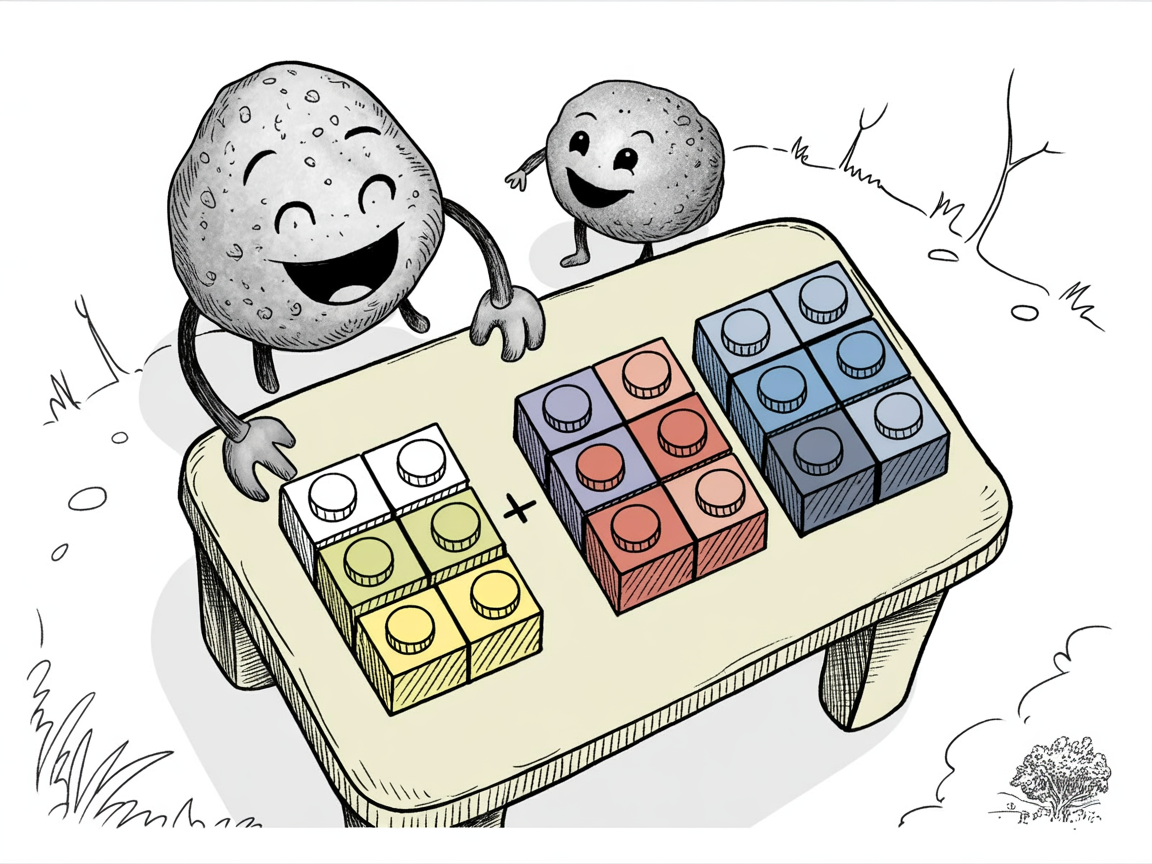
LEGO or building blocks: Stack blocks to show that two small pieces equal one large piece. Line them up side by side to compare 1/3 and 1/4. The clicking sound when they connect makes equal fractions satisfying to discover.
Paper strips or construction paper: Cut rectangles and fold them into halves, thirds, or eighths. Your child can see how 2/4 covers the same space as 1/2. Paper is cheap and forgiving. You can make as many as you need.
Measuring cups and spoons: Baking connects fractions to something your child wants to do anyway. Pour 1/4 cup four times to fill the 1-cup measure. The math becomes muscle memory, not just theory.
Teaching Equivalent Fractions and Comparing Fractions with Manipulatives
Your child insists that 1/2 and 2/4 can’t be the same because the numbers look different. You explain it three ways, but the confusion remains. This is where teaching fractions with manipulatives turns frustration into discovery. When your child holds two fraction circles—one split in half, one split into fourths—and sees that one pink piece covers the exact same space as two yellow pieces, something clicks. The abstract rule becomes a visible truth they figured out themselves.
Comparing fractions works the same way. Instead of memorizing which fraction is bigger, your child lines up a 1/3 bar next to a 1/4 bar and sees the answer instantly. The longer piece is bigger. Pattern blocks make it even clearer. Stack a yellow hexagon next to red trapezoids and blue rhombuses. Your child discovers that 1/2 equals 3/6 without you saying a word. Let them experiment. Let them make mistakes and correct themselves. When they find the patterns on their own, they don’t just learn fractions. They understand them.
Common Mistakes to Avoid When Using Manipulatives
Manipulatives are powerful teaching tools. But a few common missteps can undermine how well they work. You might be tempted to move quickly or mix things up for variety. That can confuse your child instead of helping them understand. Here’s what to watch out for:
Moving to worksheets too soon. If your child can’t explain the concept using the objects, they’re not ready for abstract symbols on paper. Let them play with the manipulatives until they can confidently show you what’s happening.
Using too many different types at once. Switching between fraction circles, bars, and pattern blocks in the same lesson creates confusion. Stick with one type until your child masters the concept. Then introduce others to reinforce understanding.
Working with unequal pieces. If the “halves” aren’t the same size, you’re teaching the wrong idea. Always check that pieces in a set are truly equal before using them.
Skipping the connection to written fractions. Manipulatives aren’t the end goal. They’re the bridge. Always connect what your child does with objects back to how fractions look on paper.
When to Move From Manipulatives to Paper
You’ll know your child is ready to transition when the manipulatives become a tool they use to confirm what they already understand. Not to figure out the problem from scratch. This shift doesn’t happen overnight. It won’t happen at the same time for every child. Watch for these signs that your child is ready to start working more on paper:
They explain fractions confidently in their own words — not repeating your explanation, but genuinely understanding what 2/3 means
They draw fraction models without you asking — sketching circles or bars to work through problems independently
They reach for manipulatives less often — using them only when a problem feels tricky, not for every single question
When you see these signs, start gradually reducing manipulative use. Keep them on the table during math time so your child can grab them when needed. Some kids need hands-on tools longer than others. That’s completely normal. The goal isn’t to rush away from manipulatives. It’s to build confidence that lasts.
Frequently Asked Questions
What age should I start teaching fractions with manipulatives?
Most kids are ready to tackle fractions around age 7 or 8. That’s when they can understand equal parts and fair sharing. But you don’t need to wait for a specific birthday. You can introduce simple concepts like halves and quarters much earlier through everyday moments. Cutting a sandwich down the middle. Sharing apple slices between siblings. Pouring juice into two equal cups. Watch your child, not the calendar. If they can understand “fair shares” and “equal parts,” they’re ready to explore fractions. Even if they’re only five or six.
Do I need to buy a fraction manipulative kit?
No, you don’t need to spend money on fancy kits. Household items work just as well. Sometimes better, because your child already knows what they are. LEGO bricks are perfect for building fraction walls. Graham crackers break into clean halves and quarters. Paper strips you cut together cost nothing and teach the same concepts as expensive fraction bars. Pizza, cookies, measuring cups—these familiar objects make fractions feel real and relevant. Save your money and raid your kitchen instead.
How long should I use manipulatives before moving to worksheets?
There’s no magic timeline that works for every child. Some kids grasp fraction concepts in a few weeks. Others need several months of hands-on practice before the ideas stick. The key is watching for understanding, not counting days. Keep using manipulatives until your child can explain what’s happening in their own words and draw accurate fraction models without help. When they can tell you why two fourths equal one half and show you with a picture, they’re ready for more abstract work. But even then, it’s fine to keep manipulatives nearby for harder problems.
My child wants to keep using manipulatives even for easy problems. Is that okay?
Yes, absolutely. Manipulatives aren’t training wheels you need to remove as fast as possible. They’re thinking tools. Many people—kids and adults—understand math better when they can touch and move objects. Your child might be a hands-on learner who processes concepts through physical interaction. That’s not a weakness or a delay. It’s a valid learning style worth supporting. Let them use fraction circles or blocks as long as they need them. You’ll probably notice they naturally reach for manipulatives less often as their confidence grows. But there’s no reason to force it.
Fractions don’t have to be the wall where math learning stops. When you make those abstract symbols tangible—when your child can fold paper, stack blocks, or divide up snacks—the confusion starts to fade. You’re not just teaching a math concept. You’re showing your child that numbers represent real things in the world around them.
The best part? You already have everything you need. A granola bar broken into pieces. Construction paper and scissors. A handful of LEGO bricks. These everyday items become powerful teaching tools when you use them with intention. Start with just one manipulative today. Show your child how to split something into equal parts. Let them touch, move, and experiment.
Watch for understanding, not speed. Solid fraction foundations take time to build. That’s completely normal. Some days will click beautifully. Others might feel slow. Keep coming back to hands-on practice. Those abstract symbols will gradually make sense. You’re giving your child something more valuable than quick answers. You’re building math confidence that will carry them forward for years to come.
Curated resources and expert insights from the Eaton team to support your homeschool journey. Our content is researched and crafted to help families thrive.