How to Choose a Homeschool Geography Curriculum That Actually Fits
The Eaton Team
•March 27, 2026•
14 min read
You want your kids to know the world beyond your town. But flipping through geography textbooks feels like memorizing lists of capitals nobody cares about. What if geography could be the subject your kids actually ask to do? They could connect dots between cultures, landscapes, and current events instead of cramming for a quiz they’ll forget next week. The right homeschool geography curriculum makes that shift possible. Instead of treating geography as a memory game, good programs help kids see how mountains shape cultures, why trade routes matter, and what daily life looks like for a child in Peru or Mongolia. Your goal isn’t to produce a walking atlas. It’s to raise children who understand their place in a bigger story. This guide walks you through what works, what doesn’t, and how to choose a homeschool geography curriculum that fits your family’s learning style and goals.
What Makes a Good Homeschool Geography Curriculum?
A strong homeschool geography curriculum doesn’t ask your child to memorize state capitals. It teaches them to think like a geographer. That means understanding why people settle near water, how climate shapes what families eat for dinner, and why some countries trade coffee while others mine copper. You’re looking for a program that builds connections instead of isolated facts.
The best curricula share a few key traits:
They teach spatial thinking. Kids learn to read maps, understand scale, and see patterns. Not just locate dots on a page.
They balance physical and human geography. Your child should learn about mountain ranges and monsoons. But also about how families in those places live, work, and solve problems.
They match how your child learns. Visual learners thrive with maps and videos. Hands-on kids need projects and models. Readers want rich stories. The right fit makes geography feel natural, not forced.
They adapt as you go. Your third grader’s needs differ from your eighth grader’s. A flexible curriculum grows with your family instead of boxing you into one approach for six years.
When geography clicks, your kids stop asking “Why do we have to learn this?” They start asking “What’s it like to live there?”
Types of Homeschool Geography Curriculum Approaches
Geography programs fall into four main camps. Knowing the differences helps you pick what’ll actually work at your kitchen table.
Traditional textbook programs give you structured lessons, maps to label, and tests to grade. They work well if you want a clear plan and don’t mind a more school-at-home feel. Your kids will learn where countries are and what their capitals are. But the approach can feel dry if your family thrives on stories and discussion.
Living books approach skips the textbook for travel stories, biographies, and picture books that bring places to life. You might read about a girl growing up in Kenya or follow an explorer’s journey through the Amazon. It’s perfect for families who love read-alouds. But you’ll need to add maps so kids anchor the stories to actual locations.
Hands-on geography centers on maps, globes, puzzles, and projects. Making salt dough maps, cooking foods from different countries, or building models of landforms. Kinesthetic learners eat this up, though it requires more prep time from you.
Digital and interactive programs use games, virtual field trips, and online quizzes to teach geography. Kids can explore the Louvre or hike Machu Picchu from your couch. Great for tech-savvy families, but screen time adds up fast.
How to Match Geography Curriculum to Your Child’s Age
A kindergartener doesn’t need to memorize tectonic plate boundaries. A high schooler shouldn’t still be coloring flags. The best homeschool geography curriculum meets kids where they are. Building skills year by year without overwhelming beginners or boring older students. If you’re teaching multiple ages, look for spine programs that let you adjust depth without buying entirely separate materials for each child.
Elementary years (K–5): Focus on exploration and wonder. Teach basic map skills. Compass directions, simple legends, identifying continents and oceans. Use picture books, cultural stories, and hands-on projects like making salt dough maps. The goal is curiosity, not memorization.
Middle school (6–8): Add regional studies that go deeper. Introduce physical geography concepts. Climate zones, landforms, how rivers shape civilizations. Connect geography to current events so kids see why location matters in real-world news.
High school (9–12): Dive into human geography, geopolitics, and economic systems. Cover college-prep content like population trends, resource distribution, and cultural geography. This is where analytical thinking replaces simple recall.
Multi-age families: Choose a spine program everyone studies together, then adjust assignments. Younger kids draw maps while older ones write essays on the same region.
What Is Human Geography and Why Does It Matter?
Human geography looks at the relationship between people and places. How cultures develop, why cities grow where they do, and how trade shapes regions. Instead of just memorizing where countries sit on a map, your kids explore why things happen where they do. Why did samurai culture take root in Japan’s mountainous regions? How does climate affect what people eat in different parts of the world? These questions turn geography into a story about real people making real choices based on where they live.
When your child understands human geography, current events start making sense. They see why water access matters in the Middle East or why certain cities became tech hubs. It builds empathy too. Learning how a family in rural India structures their day differently than yours helps kids see the world through other perspectives. That’s the kind of understanding that sticks long after the textbook closes.
How Much Should You Spend on Homeschool Geography Curriculum?
Geography doesn’t require a big budget to be effective. You can build a strong program at almost any price point. The key is knowing where to invest and where to save. A $200 boxed curriculum isn’t automatically better than a $40 book paired with library resources. What matters is whether the materials match how your kids learn and whether you’ll actually use them.
Here’s how different budget levels break down:
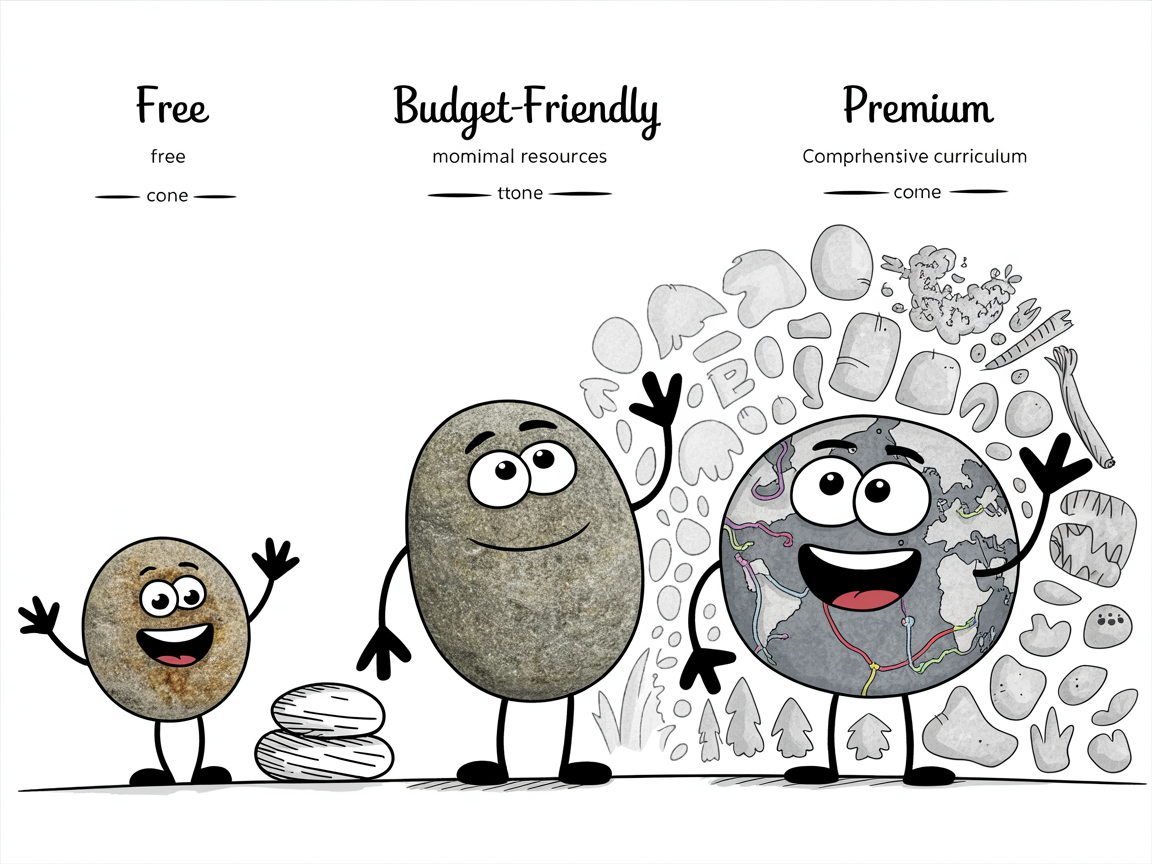
Free and low-cost options ($0-30): Library books, YouTube documentaries, printable maps from National Geographic Education, and free apps like Google Earth give you plenty to work with. These work best when you’re comfortable creating your own lesson structure.
Mid-range programs ($30-100): Structured curricula like trail guides or unit studies provide the framework so you don’t have to plan from scratch. Many include reusable maps, activity pages, and teaching notes. This range offers the best value for most families.
Premium options ($100+): Complete programs with video lessons, online platforms, and customer support. Worth it if you need hand-holding or want a done-for-you solution. But not necessary for geography success.
Budget tip: Buy one quality wall map and a decent globe. Budget $40-60 total, then build everything else around free resources. Those two tools will get more use than any workbook.
Red Flags to Avoid When Choosing Geography Curriculum
Not every geography program deserves a spot on your shelf. Some curricula promise the world but deliver frustration instead. Before you buy, watch for these warning signs that a program won’t work for your family:
Rigid scripts that ignore your child’s curiosity. If the teacher’s guide demands you stick to exact wording and won’t let you follow a question about volcanoes because “that’s unit seven,” you’ll kill the joy fast.
Memorization without meaning. Programs that focus on labeling maps and reciting capitals without explaining why borders exist or how geography affects people teach facts that vanish by summer.
Prep time that eats your evening. You’re homeschooling to teach your kids, not to become a curriculum developer. If you’re spending an hour prepping for a thirty-minute lesson, something’s broken.
Outdated materials. Maps showing the Soviet Union or cultural sections written in 1995 don’t just look old. They teach your kids information that’s actively wrong.
Your Step-by-Step Plan to Choose the Right Homeschool Geography Curriculum
Choosing a homeschool geography curriculum doesn’t have to mean endless research and second-guessing. Break it down into four manageable steps, and you’ll land on something that actually works for your family.
Identify your goals. Are you building map skills for a younger student? Developing cultural literacy for a middle schooler? Preparing a high schooler for college-level work? Your answer shapes everything else. A second grader needs hands-on continent studies, not AP Human Geography prep.
Assess your child’s learning style and your teaching preferences. Does your kid light up with hands-on projects, or do they prefer reading and discussion? Are you comfortable leading open-ended activities, or do you need a scripted lesson plan? Be honest. A curriculum that doesn’t match your teaching reality will sit on the shelf.
Research 3-4 programs that match your criteria and budget. Look at samples, read reviews from families with similar goals, and compare what’s included. Check whether you need to buy extras like maps or atlases. Factor in prep time. Some programs are open-and-go, others require significant planning.
Start with a trial or single level before committing to a full series. Most publishers offer sample lessons or single-grade purchases. Test-drive one level to see if it clicks with your family before investing in a multi-year set. You can always switch if it’s not the right fit.
Frequently Asked Questions
What age should I start teaching geography to my homeschooler?
You can start as early as preschool with simple activities. Pointing out your state on a map, spinning a globe to find the ocean, or talking about where grandma lives. These tiny exposures build spatial awareness without pressure. Formal geography instruction typically begins around 1st or 2nd grade, when kids can grasp that maps represent real places. But keep it playful and hands-on in the early years. A kindergartener doesn’t need to memorize continents. They need to feel curious about the world. If your five-year-old wants to find Antarctica after reading a penguin book, that’s geography. If they don’t, that’s fine too. You’re planting seeds, not giving tests.
Do I need a separate geography curriculum or can I integrate it with history?
Both approaches work, and your choice depends on your teaching style and goals. Many families integrate geography into history studies. Learning about ancient Egypt’s Nile River while studying pharaohs, or exploring European terrain during World War II lessons. This approach feels natural and saves time. Others prefer standalone geography for systematic map skills and complete world coverage that history might skip. If your history curriculum jumps from Rome to the American Revolution, you’ll miss entire continents. A dedicated geography program ensures you cover the whole world methodically. Some families do both. A standalone curriculum for elementary years to build strong foundations, then integration during middle and high school. There’s no wrong answer here.
How much time should we spend on geography each week?
Most families dedicate one to three hours per week to geography, depending on grade level and approach. Elementary students might do 20-30 minutes twice weekly. Enough time to color a map, read about a country, or watch a short video. Middle schoolers often spend 30-45 minutes two or three times weekly as content gets deeper. High schoolers tackling physical geography or AP Human Geography may need 45-60 minutes several times a week. If you’re integrating geography with history, it blends into your existing history time. The key is consistency over marathon sessions. Fifteen minutes daily beats a frantic hour on Friday. Your kids will retain more and complain less.
What’s the difference between physical and human geography?
Physical geography studies Earth’s natural features. Mountains, rivers, deserts, climate zones, ecosystems, and how they formed. It answers questions like “Why is the Sahara a desert?” or “How do monsoons work?” Human geography examines how people interact with places. Cultures, languages, cities, economies, religions, migration patterns, and political boundaries. It explores questions like “Why do most Egyptians live near the Nile?” or “How does climate affect what people eat?” A complete geography education includes both. Physical geography helps kids understand the stage. Human geography shows them the players. When your daughter learns that Japan is mountainous (physical) and sees how that pushed people to coastal cities (human), geography clicks into place as a living subject, not a list of facts.
The right homeschool geography curriculum turns a forgettable subject into something your kids actually care about. Instead of drilling state capitals, they’ll start connecting landscapes to cultures, trade routes to history, and current events to the places they’re studying. That’s the shift you’re aiming for. Helping your children see the world as connected and meaningful, not just a test to pass.
Start by getting clear on what you want geography to accomplish in your homeschool. Does your daughter light up with hands-on projects, or does your son prefer reading and discussion? Once you know your goals and your child’s learning style, you can choose a program that fits your family’s rhythm and budget. And here’s the good news: geography is one of the easiest subjects to customize. You can add documentaries, skip chapters that don’t fit, or switch programs entirely if something isn’t working. Your kids will change, and your approach can change with them. Pick something that feels doable today, try it for a month, and adjust as you go.
Curated resources and expert insights from the Eaton team to support your homeschool journey. Our content is researched and crafted to help families thrive.