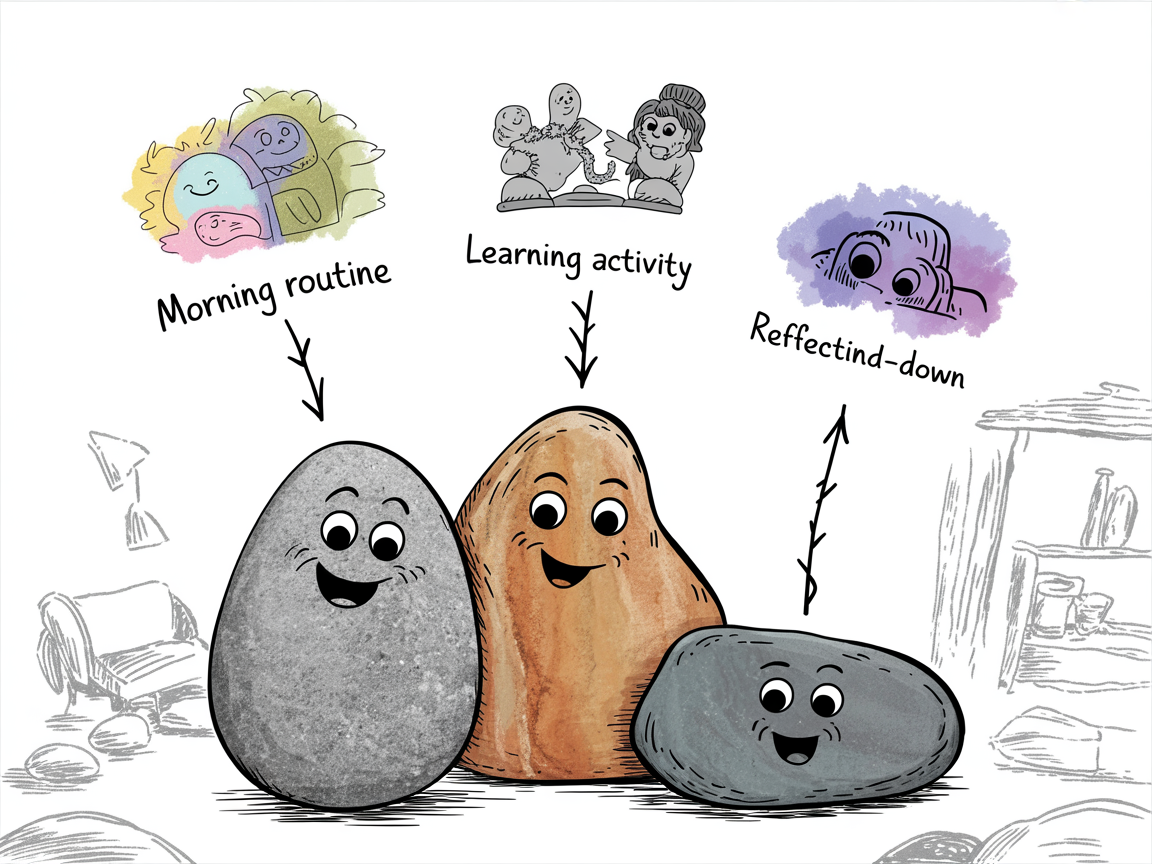
Homeschool Daily Schedule That Actually Works (Even on Chaotic Days)
The Eaton Team
•May 27, 2026•
11 min read
You spent an hour making the perfect homeschool daily schedule. By 10 AM on day one, it fell apart. The baby needed attention, your oldest refused math, and you forgot about the dentist. Sound familiar? You’re not alone—and your schedule doesn’t have to be perfect to work.
Here’s the good news: homeschooling doesn’t need a six-hour school day. According to The Schoolhouse, homeschool students in grades 3 and 4 need only 2 to 3 hours of daily instruction to match the progress of public-school students in a 6-to-7-hour day. That’s because your one-on-one teaching is more efficient than a classroom.
The key isn’t a rigid schedule—it’s a flexible framework that adapts to your family’s rhythm. In this guide, you’ll learn how to build a homeschool daily schedule that survives real life. We’ll cover time blocks, subject priorities, and how to adjust when things go sideways (because they will).
Why Traditional Homeschool Daily Schedules Fail
You’ve seen those picture-perfect homeschool daily schedules on Pinterest. Math at 9:00, science at 10:30, lunch at noon. They look great on paper—but they crumble in real life. Here’s why rigid schedules don’t work for most homeschool families:
Real life doesn’t follow a clock. The plumber shows up during history. Your toddler has a meltdown during math. Your teenager needs extra time on a writing assignment. These aren’t failures—they’re just Tuesday.
Kids don’t learn on a timer. Some days your child flies through phonics in 15 minutes. Other days, the same lesson takes 45. That’s normal brain development, not a schedule problem.
Interruptions are part of homeschooling. Doctor appointments, sick days, field trips, and family emergencies happen. A schedule that can’t bend will break—and leave you feeling defeated.
Guilt comes from impossible standards. When you compare your messy reality to an ideal schedule, you’ll always feel like you’re failing. The truth? Most elementary homeschoolers spend just 2 to 3 focused hours per day on academics—and still do better than their peers.
Why inflexible homeschool daily schedules often fall apart
What Makes a Homeschool Daily Schedule Actually Work?
The homeschool daily schedules that survive real life share four key traits. They’re built around what matters most, not what looks impressive on paper.
Focus on priorities, not perfection. Identify your non-negotiables—usually math, reading, and writing. Everything else can flex. If you only finish these three subjects, you’ve had a successful day.
Build in flexibility and buffer time. Don’t schedule back-to-back subjects with no breathing room. Add 15-minute buffers between activities. When your child needs extra time on a concept or the baby wakes up early, your whole day won’t collapse.
Use routines instead of strict schedules. “Math after breakfast” works better than “math at 9:00 AM.” Routines give structure without the stress of watching the clock. Your kids know what comes next, but you’re not racing against time.
Match your family’s natural rhythms. Are your kids sharp in the morning? Do the hard subjects then. Do you have a toddler who naps after lunch? That’s your quiet time for older kids’ independent work. Work with your reality, not against it.
The Three Essential Parts of Every Flexible Schedule
Every homeschool daily schedule needs structure, but not rigidity. Think of your day in three categories: what must happen, what can move, and what gives you breathing room. This approach lets you protect your priorities while staying sane when life throws curveballs.
Non-negotiables: These are your core subjects—reading, math, and writing. Schedule them first, during your best hours. According to The Schoolhouse, most elementary homeschoolers need just 2 to 3 focused hours per day on academics. Put these subjects in a consistent morning block when everyone’s fresh.
Flexible blocks: Science, history, art, and read-alouds go here. These can shift to afternoon, get combined into project days, or move to different days. If math runs long or the baby melts down, you can push these without guilt. They still happen—just not on a rigid clock.
Free time: Build in at least 30 minutes of margin each day. This isn’t wasted time—it’s your buffer for interruptions, transitions that take longer than expected, and kids who need extra help. It also gives you space to breathe and prevents burnout.
Start by listing everything you want to cover in a week. Then sort each item into one of these three buckets. You’ll quickly see what matters and what can flex.
The three essential components of a flexible homeschool daily schedule
How to Build Your Family’s Homeschool Schedule in 5 Steps
You don’t need a perfect homeschool daily schedule—you need one that fits your family. Start with these five steps to create a framework that bends without breaking.
List your must-do subjects and activities. Write down what you’re legally required to teach and what matters most to your family. Include math, reading, and any state requirements. Add music lessons, co-op days, or other commitments you can’t move. This becomes your anchor list.
Note your family’s energy patterns. Are your kids sharp in the morning or slow to wake up? Do you hit a wall after lunch? Most families find that 2 to 3 focused hours per day covers elementary academics—schedule those hours when everyone’s alert.
Create time blocks, not minute-by-minute slots. Instead of “9:00-9:30 math,” try “morning block: math and language arts.” This gives you wiggle room when your third-grader needs extra help or your toddler has a meltdown.
Add buffer time between activities. Build in 10-15 minutes between subjects for bathroom breaks, snacks, and transitions. Real life needs breathing room.
Test it for a week, then adjust. Your first homeschool daily schedule is a draft. After five days, you’ll see what works and what doesn’t. Move things around until it feels sustainable, not exhausting.
Sample Homeschool Daily Schedules for Different Family Styles
There’s no one-size-fits-all homeschool daily schedule. What works for your neighbor might crash and burn in your house—and that’s okay. The best schedule is the one you’ll use. Here are four proven frameworks you can adapt to fit your family’s natural rhythm.
Early Bird Family (7 AM start): Tackle math and reading before 10 AM while everyone’s fresh. Break for lunch at noon. Spend afternoons on hands-on projects, read-alouds, and outdoor time. This works great if your kids wake up ready to learn and you want afternoons free for activities.
Multi-Age Schedule (staggered start): Begin with everyone together for morning time—read-alouds, calendar, and memory work. Then rotate one-on-one time with each child for their grade-level work while others do independent activities. Older kids can work alone while you teach younger ones. End with a group project or nature walk.
Working Parent Schedule (flexible blocks): Use early morning for independent work your kids can do alone—math apps, reading, or journaling. Save your teaching-intensive subjects for when you’re available, even if that’s evening. Remember, The Schoolhouse reports that most elementary homeschoolers need only 2 to 3 focused hours of instruction daily.
Loop Schedule (maximum flexibility): List all subjects on a chart. Each day, work through the list in order until your time is up. Pick up where you left off tomorrow. Nothing gets skipped—it just rotates through. This removes the pressure of fitting everything into one day and adapts beautifully to interrupted weeks.
Sample homeschool daily schedules adapted for different family styles and needs
When Your Schedule Falls Apart (And How to Recover)
Your homeschool daily schedule will fall apart. The question isn’t if, but when—and what you do next matters more than the disruption itself. One chaotic morning doesn’t mean your whole approach is broken. But if you’re fighting the same battle every day, something needs to change.
Here’s how to tell the difference and respond:
Off-days vs. pattern problems: One or two rough days per week is normal life. Five rough days means your schedule doesn’t fit your family’s reality right now.
Quick fixes for common disruptions: Baby won’t nap? Do read-alouds instead of independent work. Sick kid? Focus on math only—you can catch up on history later. Unexpected appointment? Shift afternoon subjects to tomorrow.
The ‘good enough’ day: If you covered one core subject and read together for 20 minutes, that counts. Remember, homeschool students need only 2 to 3 hours of daily instruction to match public school progress.
When to restart completely: If you’ve had two weeks of constant struggle, don’t keep pushing. Take a day to observe your family’s natural rhythm, then rebuild your homeschool daily schedule around what happens—not what you wish would happen.
Tools and Tips to Keep Your Schedule on Track
The right tools make all the difference between a schedule you follow and one that sits in a drawer. But you don’t need fancy apps or expensive planners—just a few simple systems that fit your family’s style.
Visual schedules for younger children: Use picture cards or a whiteboard with drawings to show the day’s flow. Kids who can’t read yet still need to know what’s coming next. It reduces “What are we doing now?” questions by about 90%.
Simple planning tools: A basic wall calendar or free app like Google Calendar works better than elaborate systems you won’t maintain. Write down only what you need to remember—not every detail of every subject.
Involve your kids: Let older children help plan their day within your framework. They’re more likely to follow a schedule they helped create. Even young kids can choose which subject comes first during morning work time.
Weekly review habit: Spend 10 minutes every Friday asking: What worked? What didn’t? Adjust one thing for next week. Small tweaks add up to big improvements over time.
The best schedule tool is the one you’ll use. Start simple and add complexity only if you need it.
Frequently Asked Questions
How long should a homeschool day be?
Most homeschool days run 3-5 hours of focused instruction, depending on grade level. Your kindergartener might need just 1-2 hours, while your high schooler could work 4-6 hours. The difference comes down to attention span and content depth. Quality matters more than quantity—one hour of focused, one-on-one teaching does what might take three hours in a classroom. Don’t feel pressured to match traditional school hours. Your efficient instruction means your kids can finish their work and still have time for play, hobbies, and family activities.
What if my child works better in the afternoon?
Design your homeschool daily schedule around your child’s natural energy patterns. There’s no rule that says school must happen in the morning. Many families do their best work in afternoon or evening hours. If your teen is a night owl, start school at noon. If your elementary student hits their stride after lunch, save the hard subjects for then. You’ll get better results working with your child’s rhythm than fighting against it. This flexibility is one of homeschooling’s biggest advantages—use it.
How do I schedule multiple children at different grade levels?
Combine subjects where possible—history, science, and read-alouds work great for mixed ages. Alternate one-on-one time with each child while others work independently. A loop schedule helps too: rotate through each child for focused instruction while the others complete assignments you’ve already explained. Teach your independent learners to work quietly during sibling instruction time. It takes practice, but most families find a rhythm within a few weeks. Start with your youngest or most dependent learner first, when everyone’s fresh.
Should I schedule breaks into my homeschool day?
Yes, absolutely. Short breaks between subjects help kids refocus and retain what they’ve learned. Most families find that 10-15 minute breaks after each subject or hour of work prevent meltdowns and improve learning. Let kids move their bodies—jump on the trampoline, run around the yard, or do jumping jacks. Brain breaks aren’t wasted time. They’re essential for processing information and maintaining attention. Build them into your schedule from the start, and you’ll see better behavior and better learning.
Your homeschool daily schedule doesn’t need to look like anyone else’s. It doesn’t need color-coded time blocks or perfectly balanced subjects. What it needs is to work for your family—on good days and chaotic ones.
The schedules that last are the ones that bend without breaking. They prioritize what matters most and leave room for real life. Your toddler will interrupt. Your teen will sleep late. The dog will eat someone’s math worksheet. A flexible framework handles all of this better than a rigid timetable ever could.
Start small this week. Pick your three non-negotiable subjects—the ones that must happen each day. Build your schedule around just those. Everything else can float. As you learn your family’s natural rhythm, you’ll know when to add more structure and when to pull back.
The perfect schedule is the one you’ll use tomorrow. And the day after that. Give yourself permission to adjust as you go—that’s not failing, that’s homeschooling.
Curated resources and expert insights from the Eaton team to support your homeschool journey. Our content is researched and crafted to help families thrive.